

🌿 Experience Premium Kratom Excellence
Jack Botanicals - AKA Certified | Superior Quality & Unbeatable Value
✨ EXCLUSIVE DEAL: JACK30 = 30% OFF Today!
Get Your Discount Now →When Ella first started using kratom to manage her chronic pain, she never imagined that three years later, she’d be searching for ways to safely reduce her daily intake. Like many kratom users, she discovered that what began as occasional use had gradually become a daily necessity. Her story isn’t unique – thousands of people find themselves wanting to learn how to taper off kratom safely and effectively.
Kratom tapering represents a gradual, controlled approach to reducing kratom consumption while minimizing withdrawal symptoms. Unlike abrupt cessation, which can lead to uncomfortable physical and psychological symptoms, tapering allows the body to slowly adjust to decreasing amounts of the substance.
- Gradual reduction is safer: Tapering kratom slowly reduces withdrawal symptoms compared to sudden discontinuation
- Individual timelines vary: Most successful tapers take 2-8 weeks depending on usage patterns and personal factors
- Support systems matter: Having medical guidance and social support significantly improves success rates
- Physical preparation helps: Proper nutrition, hydration, and sleep hygiene support the tapering process
- Withdrawal symptoms are temporary: Most physical symptoms peak within the first week and gradually subside
Understanding Kratom Dependence and Why Tapering Matters
Kratom contains alkaloids that interact with opioid receptors in the brain, particularly mitragynine and 7-hydroxymitragynine. Regular use can lead to physical dependence, where the body adapts to the presence of these compounds. When kratom use stops suddenly, withdrawal symptoms can occur as the body readjusts.
Common Signs That Indicate Need for Tapering
- Increased tolerance: Needing higher doses to achieve the same effects
- Daily use patterns: Using kratom multiple times throughout the day
- Withdrawal between doses: Experiencing discomfort when doses are delayed
- Lifestyle impact: Kratom use affecting work, relationships, or daily activities
- Unsuccessful quit attempts: Previous failed attempts at sudden cessation
The severity of dependence often correlates with how long the effects of kratom last and frequency of redosing patterns.
Creating Your Kratom Tapering Plan
Step 1: Assess Your Current Usage
Before beginning any taper, document your current kratom consumption patterns:
- Daily dosage: Total grams consumed per day
- Frequency: Number of doses taken daily
- Timing: When doses are typically taken
- Strain preferences: Types of kratom regularly used
- Duration of use: How long you’ve been using kratom regularly
Step 2: Choose Your Tapering Method
Gradual Dose Reduction Method 📉
This approach involves reducing your total daily kratom intake by 10-25% every 3-7 days. For example, if you currently take 20 grams daily, you might reduce to 15 grams for a week, then 12 grams the following week.
Frequency Reduction Method ⏰
Instead of reducing dose size, eliminate one daily dose every few days. If you typically dose four times daily, reduce to three times daily for several days before eliminating another dose.
Strain Switching Method 🔄
Some users find success switching to milder strains like red Vietnam kratom before beginning their taper, as these may have gentler effects.
🌿 Kratom Tapering Schedule Calculator
Your Personalized Taper Schedule
Note: This is a general guideline. Consult with a healthcare professional before starting any tapering program.
Managing Withdrawal Symptoms During Your Taper
Physical Symptoms and Timeline
Understanding how long kratom withdrawals last helps set realistic expectations. Common physical symptoms include:
Days 1-3:
- Mild fatigue and lethargy
- Slight muscle aches
- Changes in appetite
- Sleep disturbances
Days 4-7:
- Peak physical discomfort
- Restless legs syndrome
- Digestive issues
- Temperature regulation problems
Week 2 and beyond:
- Gradual improvement in physical symptoms
- Continued sleep pattern adjustment
- Energy levels slowly returning to baseline
Psychological Symptoms
Mental and emotional symptoms often persist longer than physical ones:
- Mood changes: Irritability, anxiety, or mild depression
- Cognitive effects: Difficulty concentrating or mental fog
- Cravings: Desire to return to previous kratom use patterns
- Motivation changes: Reduced interest in usual activities
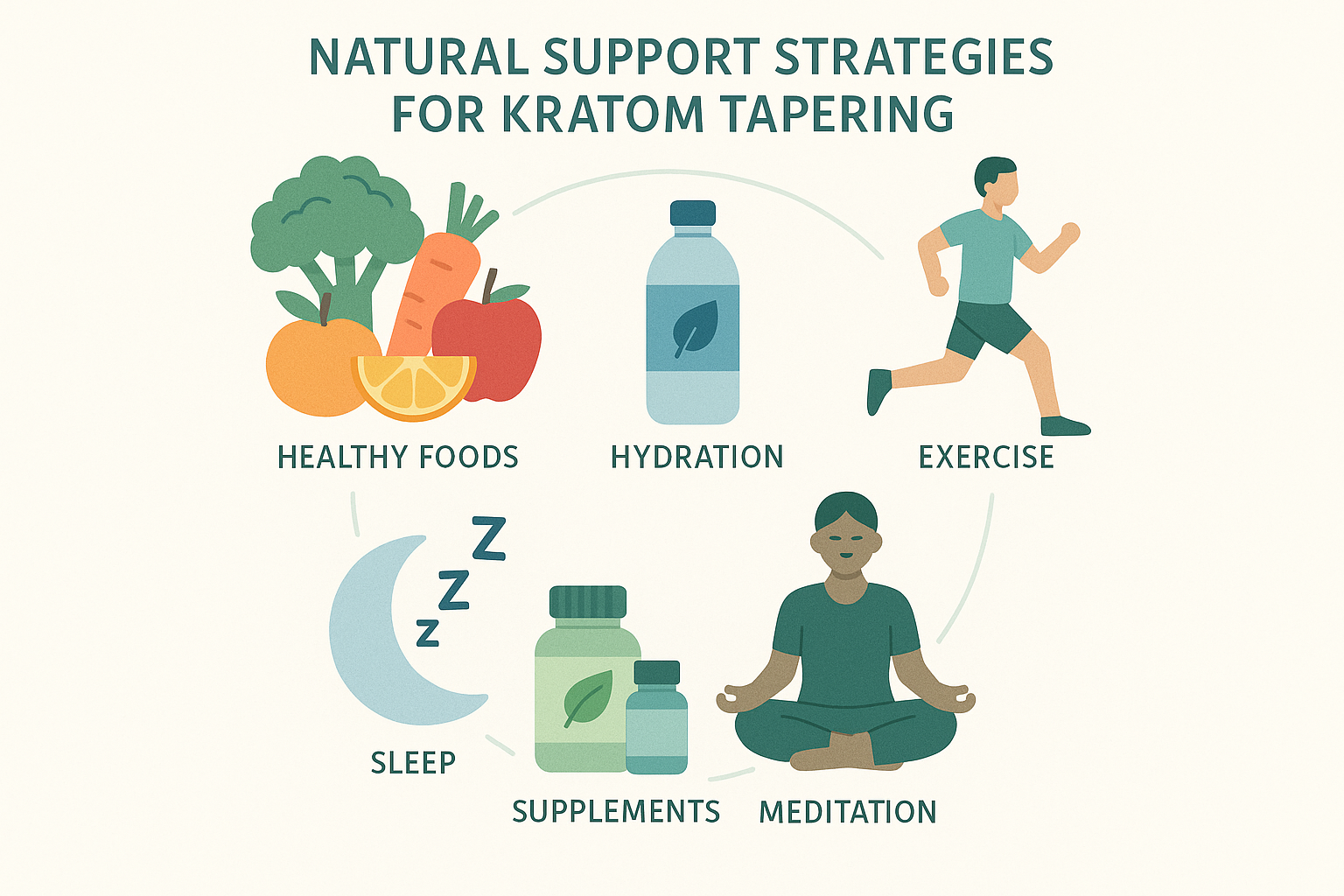
Natural Support Strategies for Kratom Tapering
🏆 America's Most Trusted Kratom Source
Jack Botanicals - AKA Approved | Premium Quality at Best Prices
💚 INSTANT SAVINGS: JACK30 for 30% OFF!
Shop Now & Save →
Nutritional Support 🥗
Essential Nutrients for Recovery:
- Magnesium: Helps with muscle relaxation and sleep (300-400mg daily)
- Vitamin C: Supports immune function and may reduce withdrawal intensity (1000-2000mg daily)
- B-Complex vitamins: Support energy production and nervous system health
- Omega-3 fatty acids: May help with mood stabilization
Hydration and Electrolyte Balance 💧
Proper hydration becomes crucial during tapering:
- Aim for 8-10 glasses of water daily
- Include electrolyte-rich beverages
- Limit caffeine and alcohol consumption
- Consider coconut water for natural electrolyte replacement
Exercise and Movement 🏃♀️
Physical activity provides multiple benefits during kratom tapering:
- Endorphin release: Natural mood elevation
- Sleep improvement: Physical tiredness promotes better rest
- Anxiety reduction: Exercise helps manage stress and worry
- Routine establishment: Creates positive daily structure
Recommended Activities:
- Light walking or hiking
- Yoga or stretching routines
- Swimming or water exercises
- Resistance training (if energy permits)
Sleep Optimization During Kratom Tapering
Sleep disturbances rank among the most challenging aspects of kratom tapering. Implementing good sleep hygiene becomes essential:
Pre-Sleep Routine
2-3 hours before bed:
- Stop all screen time or use blue light filters
- Avoid large meals and stimulating activities
- Begin relaxation activities
1 hour before bed:
- Take a warm bath or shower
- Practice meditation or deep breathing
- Read something calming
- Prepare your sleep environment
Natural Sleep Aids
Several natural supplements may help improve sleep quality:
- Melatonin: 1-3mg taken 30 minutes before desired sleep time
- Valerian root: Traditional herb for sleep support
- Chamomile tea: Gentle, calming beverage
- Magnesium glycinate: Promotes muscle relaxation
When to Seek Professional Help
Medical Supervision Indicators
Consider professional medical guidance if you experience:
- Severe depression or anxiety: Thoughts of self-harm or persistent hopelessness
- Unmanageable physical symptoms: Severe nausea, vomiting, or dehydration
- Sleep disorders: Complete inability to sleep for multiple days
- Previous failed attempts: Multiple unsuccessful tapering or quitting efforts
- Co-occurring conditions: Other substance use or mental health issues
Healthcare Provider Options
Primary Care Physicians: Can provide general medical support and monitoring
Addiction Specialists: Specialize in substance use disorders and withdrawal management
Mental Health Professionals: Offer counseling and psychological support
Integrative Medicine Practitioners: May provide holistic approaches combining conventional and alternative methods
Building Your Support System
Family and Friends
Open communication with trusted loved ones provides crucial emotional support:
- Explain your goals: Help them understand what you’re trying to accomplish
- Set boundaries: Ask for specific types of support you need
- Regular check-ins: Schedule consistent conversations about your progress
- Patience requests: Help them understand that mood changes are temporary
Online Communities and Support Groups
Digital support networks offer 24/7 accessibility:
- Reddit communities: Subreddits dedicated to kratom tapering and quitting
- Facebook groups: Private groups for sharing experiences and encouragement
- Discord servers: Real-time chat support with others going through similar experiences
- Specialized forums: Websites dedicated to kratom discussion and support
Common Tapering Mistakes to Avoid
Rushing the Process ⚠️
The Problem: Reducing doses too quickly to “get it over with”
The Solution: Remember that slower tapers typically have higher success rates and fewer severe symptoms
Inconsistent Dosing 📊
The Problem: Taking extra doses during difficult days or skipping planned reductions
The Solution: Stick to your predetermined schedule, but allow flexibility for minor adjustments if needed
Lack of Preparation 🎯
The Problem: Starting a taper without proper planning or support systems
The Solution: Spend time preparing your environment, support network, and coping strategies before beginning
Ignoring Underlying Issues 🧠
The Problem: Not addressing the reasons why kratom use began initially
The Solution: Consider therapy or counseling to address pain management, anxiety, depression, or other underlying conditions
Alternative Approaches and Complementary Therapies
Mindfulness and Meditation 🧘♂️
Regular meditation practice offers multiple benefits during kratom tapering:
- Stress reduction: Helps manage anxiety and emotional discomfort
- Body awareness: Increases recognition of physical sensations and needs
- Emotional regulation: Develops skills for managing difficult feelings
- Sleep improvement: Calming practices promote better rest
Getting Started:
- Begin with 5-10 minute sessions
- Use guided meditation apps or videos
- Focus on breath awareness or body scanning
- Practice consistently, even when motivation is low
Acupuncture and Traditional Medicine
Some people find relief through alternative medical approaches:
- Acupuncture: May help with pain, anxiety, and sleep issues
- Massage therapy: Provides relaxation and muscle tension relief
- Chiropractic care: Addresses physical discomfort and alignment
- Herbal medicine: Consulting with qualified practitioners about supportive herbs
Cognitive Behavioral Techniques
Developing healthy thought patterns supports long-term success:
- Identifying triggers: Recognizing situations that increase kratom cravings
- Reframing thoughts: Challenging negative or catastrophic thinking
- Behavioral activation: Engaging in positive activities even when unmotivated
- Relapse prevention: Planning responses to challenging situations
Long-term Success Strategies
Lifestyle Changes
Successful kratom tapering often involves broader life improvements:
Stress Management:
- Regular exercise routines
- Healthy work-life boundaries
- Relaxation techniques
- Time management skills
Social Connections:
- Rebuilding relationships affected by kratom use
- Developing new friendships based on shared healthy interests
- Participating in community activities or volunteering
- Joining clubs or groups aligned with personal interests
Purpose and Meaning:
- Setting new personal goals
- Exploring creative outlets
- Considering career or educational opportunities
- Engaging in activities that provide fulfillment
Preventing Relapse
Environmental Changes:
- Remove kratom and related paraphernalia from living spaces
- Avoid places strongly associated with kratom use
- Change routines that previously included kratom consumption
- Know where to buy kratom to avoid impulsive purchases
Coping Skill Development:
- Practice stress management techniques daily
- Develop a list of alternative activities for managing difficult emotions
- Create emergency action plans for intense cravings
- Maintain regular self-care practices
Special Considerations for Different Users
Long-term Users
People who have used kratom for years may face unique challenges:
- Extended tapering periods: May need 3-6 months for comfortable reduction
- Medical supervision: Higher likelihood of needing professional support
- Underlying conditions: Original reasons for kratom use may resurface
- Social factors: Kratom use may be deeply integrated into daily life and relationships
High-Dose Users
Those consuming large daily amounts (30+ grams) require special attention:
- Medical monitoring: Higher risk of severe withdrawal symptoms
- Slower reduction rates: May need to reduce by smaller percentages
- Nutritional support: Greater need for vitamin and mineral supplementation
- Professional guidance: Strong recommendation for medical supervision
Users with Co-occurring Conditions
People managing other health issues alongside kratom use need comprehensive approaches:
- Pain management: Working with healthcare providers to address chronic pain
- Mental health: Treating anxiety, depression, or other psychiatric conditions
- Substance use: Addressing multiple substance dependencies simultaneously
- Medical conditions: Managing diabetes, heart conditions, or other health issues
❓ Frequently Asked Questions About Kratom Tapering
Taper duration varies based on individual factors, but most successful tapers take 4-12 weeks. Consider these factors:
- Current dose: Higher doses typically require longer tapers
- Usage duration: Longer-term users may need extended tapering periods
- Personal sensitivity: Some people are more sensitive to dose reductions
- Life circumstances: Work, family, and stress levels affect taper speed
A general rule is reducing 10-25% of your current dose every 3-7 days, allowing your body time to adjust.
Kratom withdrawal symptoms are generally milder than other opioids but can still be uncomfortable:
- Physical: Muscle aches, fatigue, runny nose, nausea, sleep disturbances
- Emotional: Anxiety, irritability, mood swings, depression
- Cognitive: Difficulty concentrating, mental fog, restlessness
Symptoms typically peak within the first week and gradually improve. Tapering significantly reduces symptom severity compared to sudden cessation.
While some supplements may help, avoid substituting other potentially addictive substances:
- Safe options: Magnesium, melatonin, valerian root, chamomile tea
- Avoid: Alcohol, benzodiazepines, other opioids, or stimulants
- Consult healthcare providers: Before taking any new supplements or medications
Natural approaches like exercise, meditation, and proper nutrition are often most effective for managing symptoms.
Both methods can work, and the best choice depends on your current usage pattern:
- Dose reduction: Keep same frequency but reduce amount per dose
- Frequency reduction: Keep dose size but eliminate dosing sessions
- Combination approach: Some people use both methods strategically
Many find dose reduction easier initially, as it maintains familiar routines while gradually reducing intake.
Setbacks are common and don’t mean failure. Here’s how to handle them:
- Don’t panic: One mistake doesn’t ruin your entire progress
- Return to schedule: Get back on your taper plan as soon as possible
- Analyze triggers: Identify what led to the slip-up
- Adjust if needed: Consider slowing your taper if slips become frequent
View setbacks as learning opportunities rather than failures. Recovery is rarely a straight line.
Consider professional help in these situations:
- Severe symptoms: Unmanageable anxiety, depression, or physical discomfort
- Multiple failed attempts: Previous unsuccessful tapering or quitting efforts
- High-dose usage: Daily intake exceeding 30+ grams
- Co-occurring conditions: Other mental health or substance use issues
- Medical concerns: Any worrying physical symptoms during tapering
Healthcare providers can offer medications, counseling, and monitoring to support your taper safely.
Long-term success requires ongoing attention and lifestyle changes:
- Address underlying issues: Treat pain, anxiety, or depression that led to kratom use
- Develop coping skills: Learn healthy stress management techniques
- Build support networks: Maintain connections with supportive friends and family
- Create new routines: Replace kratom-associated activities with healthy alternatives
- Stay vigilant: Recognize early warning signs of potential relapse
Consider ongoing therapy or support groups to maintain motivation and accountability.
Yes, many people successfully taper while maintaining work responsibilities:
- Plan timing: Start tapers during less stressful work periods
- Communicate if needed: Consider discussing flexible arrangements with employers
- Manage energy: Prioritize sleep and nutrition to maintain work performance
- Use slower tapers: Gradual reductions minimize work-disrupting symptoms
A well-planned, gradual taper often allows people to maintain normal daily activities with minimal disruption.
Monitoring Your Progress

Tracking Methods
Daily Journals: Record dose amounts, timing, symptoms, and mood
Symptom Scales: Rate withdrawal symptoms on a 1-10 scale daily
Sleep Logs: Track sleep quality, duration, and disturbances
Mood Tracking: Monitor emotional states and triggers
Celebrating Milestones 🎉
Recognizing progress helps maintain motivation:
- Weekly achievements: Acknowledge each week of successful tapering
- Dose milestones: Celebrate reaching 50% reduction, 25% reduction, etc.
- Symptom improvements: Notice when specific symptoms begin to fade
- Lifestyle gains: Recognize improvements in relationships, work, or health
Adjusting Your Plan
Flexibility allows for individual needs:
- Slower reductions: If symptoms become unmanageable
- Pause periods: Maintaining current dose during stressful life events
- Method changes: Switching between dose reduction and frequency reduction
- Professional consultation: Seeking guidance when progress stalls
The Science Behind Kratom Tapering
Neurological Adaptation
Understanding how the brain adapts during tapering helps explain the process:
- Receptor sensitivity: Opioid receptors gradually return to baseline sensitivity
- Neurotransmitter balance: Dopamine and serotonin systems slowly readjust
- Tolerance reversal: Reduced tolerance allows lower doses to become effective again
- Homeostasis restoration: The body’s natural balance systems recover
Individual Variation Factors
Several factors influence tapering success:
- Genetics: Individual differences in drug metabolism and sensitivity
- Age: Younger people often recover more quickly
- Overall health: Physical fitness and nutrition status affect recovery
- Mental health: Pre-existing conditions influence withdrawal severity
- Social support: Strong support networks improve outcomes
Legal Considerations and Safety
Understanding Kratom Legality
Before beginning any kratom taper, understand your local legal situation. Kratom legality varies by location, and laws continue to evolve. Some considerations:
- State regulations: Laws differ significantly between states
- Local ordinances: Cities and counties may have additional restrictions
- Workplace policies: Employers may have specific policies regarding kratom
- Travel considerations: Kratom legality varies when traveling between jurisdictions
Safe Disposal Methods
When completing your taper, dispose of remaining kratom safely:
- Household trash: Mix with unpalatable substances like coffee grounds
- Pharmacy take-back programs: Some pharmacies accept unused substances
- Law enforcement disposal: Police departments sometimes offer disposal services
- Avoid flushing: Don’t flush kratom down toilets or drains
Resources for Continued Support
Professional Resources
National Suicide Prevention Lifeline: 988 (for mental health crises)
SAMHSA National Helpline: 1-800-662-4357 (treatment referrals and information)
Crisis Text Line: Text HOME to 741741 (24/7 crisis support)
Psychology Today: Directory for finding local mental health professionals
Educational Materials
Books and Publications: Research evidence-based addiction recovery literature
Academic Research: Stay informed about latest kratom research developments
Medical Journals: Access peer-reviewed studies on kratom and withdrawal
Government Resources: FDA and DEA information on kratom regulations
Online Communities
Reddit Communities: r/quittingkratom, r/kratom (for balanced perspectives)
Facebook Groups: Private support groups for kratom users and those quitting
Discord Servers: Real-time chat support with others in similar situations
Specialized Forums: Websites dedicated to kratom discussion and harm reduction
Conclusion
Learning how to taper off kratom successfully requires patience, planning, and persistence. The journey from regular kratom use to complete discontinuation represents a significant personal achievement that requires both physical and mental preparation.
The most successful kratom tapers share common elements: gradual dose reduction, strong support systems, attention to physical health, and realistic timelines. Remember that everyone’s experience will be unique, and what works for one person may need adjustment for another.
Key principles for success include starting with a well-planned tapering schedule, maintaining proper nutrition and hydration, building supportive relationships, and being prepared to seek professional help when needed. The temporary discomfort of withdrawal symptoms pales in comparison to the long-term benefits of regaining control over your kratom use.
Whether you’re just beginning to consider tapering or you’re already in the process, remember that setbacks don’t equal failure. Each step toward reducing kratom dependence represents progress toward greater freedom and improved quality of life.
For those seeking quality kratom products during their taper or looking to buy kratom online from reputable sources, prioritize vendors who emphasize product quality and customer education about responsible use.
Take the first step today by assessing your current usage patterns and creating a realistic tapering plan. Your future self will thank you for the courage to begin this important journey toward kratom independence
Michael Barrett
Michael Barrett is a lifelong learner who has immersed himself in the study of ecological practices and cultural storytelling. With a background in anthropology and folklore, Michael explores how plants have influenced language, customs, and ancestral wisdom. He believes that reconnecting with these stories helps modern individuals build stronger, more respectful relationships with the natural world. His personal journey includes participating in seasonal festivals, forest walks, and community-based conservation projects. Michael’s content doesn’t aim to teach or advise but rather to inspire wonder and highlight the shared human experience shaped by nature’s quiet influence.
