

🌿 Experience Premium Kratom Excellence
Jack Botanicals - AKA Certified | Superior Quality & Unbeatable Value
✨ EXCLUSIVE DEAL: JACK30 = 30% OFF Today!
Get Your Discount Now →You’re planning a trip to Japan, and kratom has become part of your daily wellness routine. As you pack your bags, a crucial question crosses your mind that could make the difference between a peaceful vacation and serious legal trouble. Is kratom legal in Japan? This question has become increasingly important as more travelers and expatriates seek clarity about Japan’s strict drug laws and how they apply to botanical substances like kratom.
Japan’s reputation for having some of the world’s most stringent drug policies makes this question particularly critical. The consequences of bringing prohibited substances into the country can be severe, ranging from immediate deportation to lengthy prison sentences. Understanding is kratom legal in Japan isn’t just about compliance—it’s about protecting your freedom and future.
- Kratom is completely illegal in Japan under the Narcotics and Psychotropics Control Law
- Possession, use, or importation of kratom can result in up to 7 years in prison
- Japan maintains a zero-tolerance policy for unauthorized substances, regardless of their legal status in other countries
- Even trace amounts of kratom in your system or belongings can lead to arrest and prosecution
- No medical exemptions exist for kratom use in Japan, unlike some other controlled substances
Japan’s Drug Laws: A Foundation of Zero Tolerance
Japan’s approach to drug control stems from historical experiences and cultural values that prioritize public safety and social order. The country’s drug laws are among the most restrictive globally, with enforcement agencies taking a particularly hard stance against any substance deemed potentially harmful.
The Narcotics and Psychotropics Control Law serves as the primary legislation governing controlled substances in Japan. This comprehensive law doesn’t just target traditional illegal drugs—it encompasses a wide range of botanical and synthetic compounds that many other countries might consider legal or unregulated.
The Legal Framework Explained
Japan’s drug classification system operates on a principle of presumptive prohibition. This means that substances are considered illegal unless explicitly permitted, rather than the reverse approach used in many Western countries. This framework directly impacts the question of is kratom legal in Japan, as kratom falls squarely within the prohibited category.
The Japanese government regularly updates its controlled substances list, often adding new compounds faster than many other nations. This proactive approach reflects the country’s commitment to preventing drug-related social problems before they can take root.
Understanding Kratom’s Legal Status in Japan
To answer definitively is kratom legal in Japan: No, kratom is completely illegal in Japan. The active compounds in kratom—primarily mitragynine and 7-hydroxymitragynine—are classified as controlled substances under Japanese law.
This prohibition isn’t recent or ambiguous. Japan added kratom to its controlled substances list specifically because of concerns about its psychoactive properties and potential for abuse. The decision was made after reviewing scientific evidence and consulting with health authorities about kratom’s effects and risks.
Why Japan Banned Kratom
Several factors contributed to Japan’s decision to prohibit kratom:
- Psychoactive properties: Japanese authorities determined that kratom’s alkaloids produce mind-altering effects
- Abuse potential: Concerns about dependency and withdrawal symptoms influenced the classification
- Public health considerations: The government prioritized preventing potential health risks to the population
- International coordination: Japan often aligns its drug policies with international drug control treaties
The ban encompasses all forms of kratom, including:
- Raw kratom leaves
- Kratom powder
- Kratom extracts and concentrates
- Kratom capsules and tablets
- Products containing any amount of kratom
Japan Kratom Legal Risk Assessment
Please answer all questions to see your risk assessment.
Legal Consequences of Kratom Possession in Japan
The penalties for kratom-related offenses in Japan are severe and can have life-altering consequences. Understanding these potential outcomes is crucial for anyone considering whether is kratom legal in Japan affects their travel or residence plans.
Criminal Penalties
Possession charges for kratom in Japan can result in:
- Up to 7 years imprisonment
- Substantial fines equivalent to thousands of dollars
- Permanent criminal record in Japan
- Immediate deportation for foreign nationals
- Lifetime ban from re-entering Japan
Distribution or trafficking charges carry even harsher penalties:
- 10+ years imprisonment
- Massive financial penalties
- Asset forfeiture
- Extended investigation periods before trial
Immigration Consequences
For foreign visitors and residents, kratom violations trigger automatic immigration enforcement:
- Immediate detention by immigration authorities
- Deportation proceedings regardless of visa status
- Permanent entry ban to Japan
- Notification to home country authorities
- Cancellation of existing visas and permits
These immigration consequences apply even to individuals with long-term residence status, work permits, or family ties in Japan. The Japanese government maintains a strict policy of removing foreign nationals who violate drug laws, regardless of personal circumstances.
Enforcement and Detection Methods
🏆 America's Most Trusted Kratom Source
Jack Botanicals - AKA Approved | Premium Quality at Best Prices
💚 INSTANT SAVINGS: JACK30 for 30% OFF!
Shop Now & Save →
Japan employs sophisticated methods to detect controlled substances, making it extremely difficult to bring kratom into the country undetected. Understanding these enforcement mechanisms helps explain why is kratom legal in Japan has such serious implications.
Border Security Measures
Japanese customs and immigration authorities use multiple detection methods:
- Advanced scanning technology that can identify organic compounds
- Trained drug detection dogs specifically taught to identify kratom
- Random baggage searches for all international arrivals
- Postal and shipping inspections for packages from kratom-source countries
- Chemical testing of suspicious substances
Domestic Enforcement
Within Japan, law enforcement actively investigates kratom-related activities:
- Undercover operations targeting online sales
- Surveillance of known distribution networks
- Cooperation with international agencies to track kratom trafficking
- Regular raids on suspected suppliers
The thoroughness of these enforcement efforts means that even small amounts of kratom are likely to be detected and prosecuted to the full extent of the law.
International Comparisons: How Japan Differs
To better understand why is kratom legal in Japan has such a definitive negative answer, it’s helpful to compare Japan’s approach with other countries’ kratom policies.
Countries Where Kratom Remains Legal
Several countries maintain legal kratom markets:
- United States (with some state-level restrictions)
- Canada (regulated as a natural health product)
- United Kingdom (legal but regulated)
- Netherlands (legal with age restrictions)
In these jurisdictions, kratom is often regulated similarly to dietary supplements, with quality control measures but general availability for adult consumers.
Countries with Similar Prohibitions
Japan isn’t alone in prohibiting kratom:
- Australia (Schedule 9 prohibited substance)
- South Korea (classified as a narcotic)
- Thailand (recently legalized but previously banned)
- Malaysia (illegal with severe penalties)
However, Japan’s enforcement tends to be more consistent and severe than many other prohibiting countries.
Alternatives for Kratom Users Visiting Japan
For individuals who regularly use kratom and are planning to visit Japan, several strategies can help manage the transition while respecting Japanese law.
Pre-Travel Preparation
Gradual reduction: Begin reducing kratom use weeks before travel to minimize withdrawal symptoms. Many users find that understanding how long kratom effects last helps them plan an appropriate tapering schedule.
Medical consultation: Speak with a healthcare provider about managing any underlying conditions that kratom was addressing. This is particularly important for longer stays in Japan.
Legal alternatives research: Investigate legal supplements available in Japan that might address similar wellness needs.
Legal Wellness Options in Japan
Japan offers various legal wellness approaches that some former kratom users find helpful:
- Traditional herbal teas available at convenience stores and pharmacies
- Meditation and mindfulness practices deeply embedded in Japanese culture
- Hot spring therapy (onsen) for relaxation and stress relief
- Acupuncture and traditional medicine widely available and respected
Managing Withdrawal Symptoms
If you’re concerned about kratom withdrawal during your Japan visit, consider these legal approaches:
- Hydration and nutrition support during the adjustment period
- Light exercise to help manage mood and energy levels
- Sleep hygiene practices to address potential sleep disruption
- Professional support if withdrawal symptoms are severe
For those wondering about how long kratom withdrawals last, planning your Japan trip after the acute withdrawal period can make the experience much more enjoyable.
Medical and Prescription Considerations
Unlike some controlled substances, kratom has no recognized medical exemptions in Japan. This means that even if kratom were prescribed or recommended by a healthcare provider in another country, it would still be illegal in Japan.
No Medical Exemptions
Japan’s controlled substances law doesn’t provide medical exemptions for kratom because:
- No approved medical uses recognized by Japanese health authorities
- Alternative treatments are considered available for any conditions kratom might address
- Safety concerns about unregulated kratom products
- Lack of standardization in kratom potency and purity
Prescription Medication Alternatives
For individuals using kratom to manage specific health conditions, Japanese healthcare providers can often suggest legal alternatives:
- Pain management: Various prescription and over-the-counter options
- Anxiety treatment: Established medications and therapies
- Sleep disorders: Approved sleep aids and behavioral interventions
- Depression: Comprehensive mental health treatment options
Recent Developments and Future Outlook
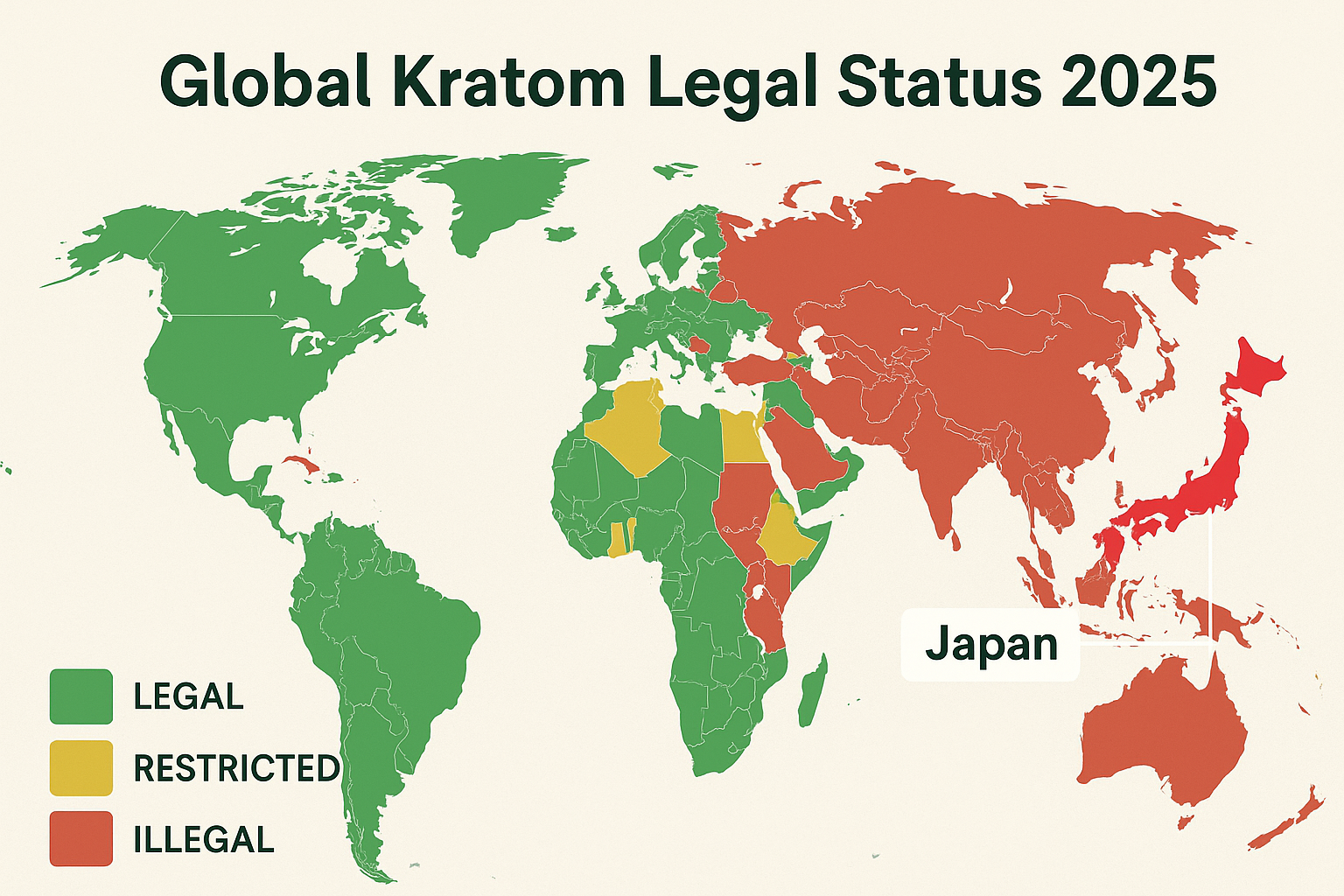
Japan’s stance on kratom has remained consistently prohibitive, with no indication of policy changes on the horizon. Recent developments have actually strengthened enforcement rather than relaxed restrictions.
Increased Enforcement Efforts
Recent years have seen:
- Enhanced customs training for kratom detection
- Improved international cooperation with source countries
- Stricter penalties for repeat offenders
- Expanded public awareness campaigns about kratom’s illegal status
Regional Influence
Japan’s kratom policies influence neighboring countries and international drug control discussions. The country often advocates for strict international controls on kratom and similar substances.
No Legalization Movement
Unlike some Western countries where kratom advocacy groups push for legalization, Japan has no significant movement to change kratom’s legal status. Cultural attitudes toward drug policy and the political system make such changes extremely unlikely.
Practical Advice for Travelers and Expatriates
If you’re planning to visit or move to Japan, here’s practical guidance regarding kratom and Japanese drug laws:
Before You Travel
- Complete cessation: Stop all kratom use well before your departure date
- Clean your belongings: Thoroughly clean luggage, clothing, and personal items that may have kratom residue
- Dispose of paraphernalia: Remove any items associated with kratom use
- Medical preparation: Consult healthcare providers about managing any conditions kratom was addressing
During Your Stay
- Avoid kratom discussions: Don’t discuss kratom use or seek information about obtaining it in Japan
- Respect local laws: Remember that ignorance of the law isn’t a defense in the Japanese legal system
- Focus on legal alternatives: Explore Japan’s rich wellness culture for legal stress relief and health support
- Stay informed: Keep up with any changes to Japanese drug laws during extended stays
If You’re Moving Permanently
Long-term residents need additional considerations:
- Healthcare transition: Establish relationships with Japanese healthcare providers early
- Legal wellness strategies: Develop sustainable, legal approaches to health and wellness
- Cultural adaptation: Embrace Japanese approaches to stress management and healthy living
- Emergency planning: Know how to access mental health support if needed
For those interested in where to buy kratom for use before traveling to Japan, it’s important to plan your final use well in advance of your departure.
Frequently Asked Questions: Kratom in Japan
Yes, kratom is completely illegal in Japan. It is classified as a controlled substance under the Narcotics and Psychotropics Control Law. There are no exceptions for personal use, medical purposes, or small amounts.
Possession of kratom in Japan can result in up to 7 years imprisonment, substantial fines, immediate deportation for foreigners, and a permanent ban from re-entering Japan. The Japanese legal system has zero tolerance for drug violations.
No, there are no medical exemptions for kratom in Japan. Unlike some prescription medications that can be brought with proper documentation, kratom has no recognized medical use under Japanese law and remains completely prohibited.
Japan uses advanced scanning technology, trained drug detection dogs, random baggage searches, and chemical testing. Customs officials are specifically trained to identify kratom and other controlled substances.
The legal status of kratom in your home country is irrelevant in Japan. Japanese law applies to everyone within Japanese territory, regardless of the laws in other countries. Many substances legal elsewhere are prohibited in Japan.
Absolutely not. All international mail and packages are subject to inspection by Japanese customs. Attempting to import kratom through postal services is illegal and will result in criminal charges and investigation.
Stop kratom use at least 2-4 weeks before traveling to Japan. This allows time for the substance to clear your system and for you to clean belongings thoroughly. Consider consulting a healthcare provider for withdrawal management if needed.
Yes, Japan offers many legal wellness options including traditional herbal teas, meditation practices, hot spring therapy (onsen), acupuncture, and various over-the-counter supplements available at pharmacies.
There is no indication that Japan will legalize kratom. Recent trends show strengthened enforcement rather than relaxed restrictions. Japan maintains a conservative approach to drug policy with no significant advocacy for kratom legalization.
Understanding Cultural Context
Japan’s strict approach to kratom and other substances reflects deeper cultural values that visitors should understand and respect. This cultural context helps explain not just the legal answer to is kratom legal in Japan, but why the prohibition is so strictly enforced.
Social Harmony and Public Safety
Japanese society places enormous emphasis on collective well-being and social order. Drug laws are viewed as essential tools for maintaining:
- Community safety and preventing drug-related crime
- Social stability by avoiding substance abuse problems
- Public health through strict prevention measures
- International reputation as a safe, orderly society
Historical Influences
Japan’s drug policies were shaped by historical experiences:
- Post-war reconstruction efforts that emphasized social discipline
- International treaty obligations under UN drug control conventions
- Regional concerns about drug trafficking from neighboring countries
- Cultural values that prioritize collective responsibility over individual choice
Understanding this context helps explain why questions about is kratom legal in Japan receive such definitive negative answers, and why exceptions or exemptions are extremely unlikely.
Economic and Tourism Implications
Japan’s strict drug laws, including the kratom prohibition, have broader implications for tourism and international business that travelers should consider.
Tourism Industry Impact
The Japanese tourism industry benefits from the country’s reputation for safety and order, which strict drug enforcement helps maintain. However, this can create challenges for:
- International visitors accustomed to different drug policies
- Long-term tourists who may use kratom for wellness purposes
- Business travelers from countries where kratom is legal
- Medical tourists seeking alternative treatments
Business Considerations
For international businesses operating in Japan, drug law compliance affects:
- Employee policies for transferred workers
- Travel guidelines for business trips
- Legal liability for companies whose employees violate drug laws
- Corporate reputation if employees face drug-related charges
Companies with employees who use kratom legally in other countries often provide specific training about Japanese drug laws before business trips or transfers.
Regional Comparison: East Asian Drug Policies

Japan’s kratom prohibition fits within a broader pattern of strict drug control across East Asia. Understanding regional approaches helps contextualize why is kratom legal in Japan has such serious implications.
South Korea
Similar to Japan, South Korea maintains strict kratom prohibitions with severe penalties. The countries often coordinate drug policy and share enforcement intelligence.
China
China has banned kratom and actively works to prevent its export to other countries. This cooperation affects kratom availability throughout the region.
Southeast Asian Policies
Interestingly, some kratom-producing countries in Southeast Asia have their own complex relationships with the plant:
- Thailand recently legalized kratom after decades of prohibition
- Malaysia maintains strict bans with severe penalties
- Indonesia allows cultivation but restricts domestic use
This regional variation means that kratom’s legal status can change dramatically when crossing borders, making it crucial to understand each country’s specific laws.
Legal Resources and Support
If you find yourself facing kratom-related legal issues in Japan, understanding available resources is crucial, though prevention remains the best strategy.
Embassy and Consular Services
Your home country’s embassy in Japan can provide:
- Legal referral services to qualified attorneys
- Communication assistance with family and employers
- Basic consular support during legal proceedings
- Information about the Japanese legal system
However, embassies cannot:
- Provide legal representation
- Interfere with Japanese legal proceedings
- Secure your release from detention
- Override Japanese law
Legal Representation
If charged with kratom possession in Japan, you’ll need qualified legal representation. Japanese criminal defense attorneys who speak English are available but expensive. Legal proceedings can be lengthy and stressful, particularly for foreign nationals unfamiliar with the Japanese legal system.
Prevention Strategies
The best approach is prevention through:
- Complete avoidance of kratom before traveling to Japan
- Thorough preparation including cleaning belongings
- Legal education about Japanese drug laws
- Alternative planning for wellness needs during your stay
For those currently using kratom and planning Japan travel, resources about how to buy kratom online can help you make final purchases well in advance of your trip, allowing time for proper cessation and preparation.
Conclusion
The question is kratom legal in Japan has a clear and unambiguous answer: No, kratom is completely illegal in Japan, with no exceptions for personal use, medical purposes, or any other circumstances. This prohibition is strictly enforced through sophisticated detection methods and severe penalties that can include up to 7 years imprisonment, immediate deportation, and permanent entry bans for foreign nationals.
Michael Barrett
Michael Barrett is a lifelong learner who has immersed himself in the study of ecological practices and cultural storytelling. With a background in anthropology and folklore, Michael explores how plants have influenced language, customs, and ancestral wisdom. He believes that reconnecting with these stories helps modern individuals build stronger, more respectful relationships with the natural world. His personal journey includes participating in seasonal festivals, forest walks, and community-based conservation projects. Michael’s content doesn’t aim to teach or advise but rather to inspire wonder and highlight the shared human experience shaped by nature’s quiet influence.
