

🌿 Experience Premium Kratom Excellence
Jack Botanicals - AKA Certified | Superior Quality & Unbeatable Value
✨ EXCLUSIVE DEAL: JACK30 = 30% OFF Today!
Get Your Discount Now →When Alice moved from Colorado to Nashville for her new job, she faced an unexpected dilemma. For months, she had been using kratom to manage her chronic pain, but now she found herself wondering: is kratom legal in Tennessee? Her story mirrors that of thousands of Americans who rely on this botanical supplement but face uncertainty when crossing state lines. The legal landscape surrounding kratom varies dramatically from state to state, making it crucial for residents and visitors to understand their local laws.
- Kratom is currently legal in Tennessee for adults 21 and older, but with specific restrictions and regulations
- The state has implemented an age restriction, making it illegal to sell kratom to anyone under 21
- Local municipalities may have additional restrictions beyond state law
- Tennessee follows the Kratom Consumer Protection Act (KCPA) framework for regulation
- Proper labeling, testing, and vendor compliance are required for legal kratom sales
Understanding Tennessee’s Kratom Laws
Current Legal Status
Is kratom legal in Tennessee? Yes, kratom remains legal in the Volunteer State, but with important caveats. Tennessee has taken a regulatory approach rather than an outright ban, implementing the Kratom Consumer Protection Act in 2021. This legislation established a framework for the legal sale and consumption of kratom while ensuring consumer safety.
The state’s approach represents a middle ground between complete prohibition and unrestricted access. Tennessee lawmakers recognized both the potential benefits and risks associated with kratom use, choosing to regulate rather than eliminate access entirely.
Age Restrictions and Requirements
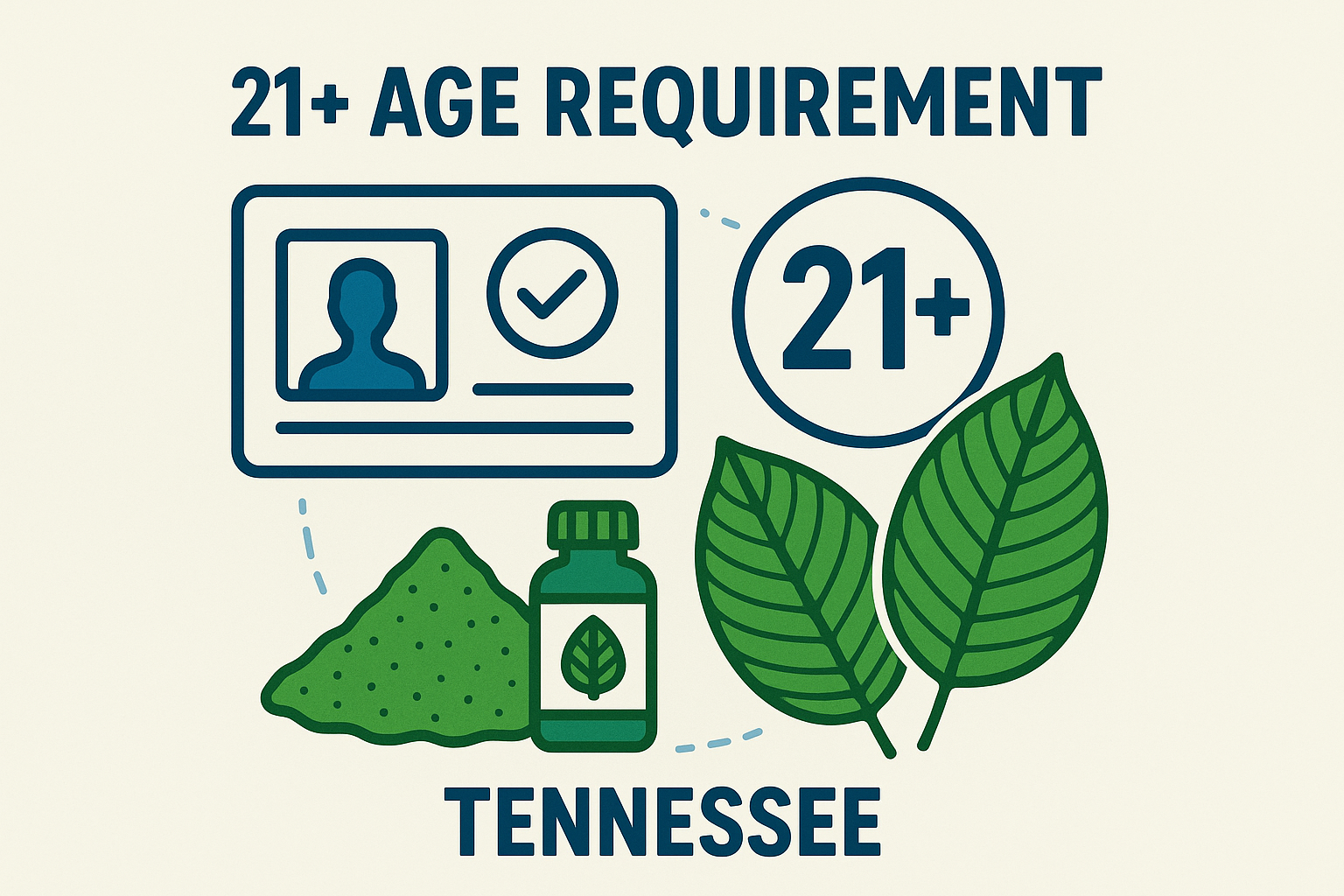
One of the most significant aspects of Tennessee’s kratom laws is the 21-year age minimum. This makes Tennessee one of several states that treat kratom similarly to alcohol in terms of age restrictions. The law specifically prohibits:
- Sale of kratom products to anyone under 21
- Possession of kratom by minors
- Distribution of kratom in areas primarily frequented by minors
Retailers must verify age through valid identification, and violations can result in significant penalties including fines and potential license revocation.
The Tennessee Kratom Consumer Protection Act
🏆 America's Most Trusted Kratom Source
Jack Botanicals - AKA Approved | Premium Quality at Best Prices
💚 INSTANT SAVINGS: JACK30 for 30% OFF!
Shop Now & Save →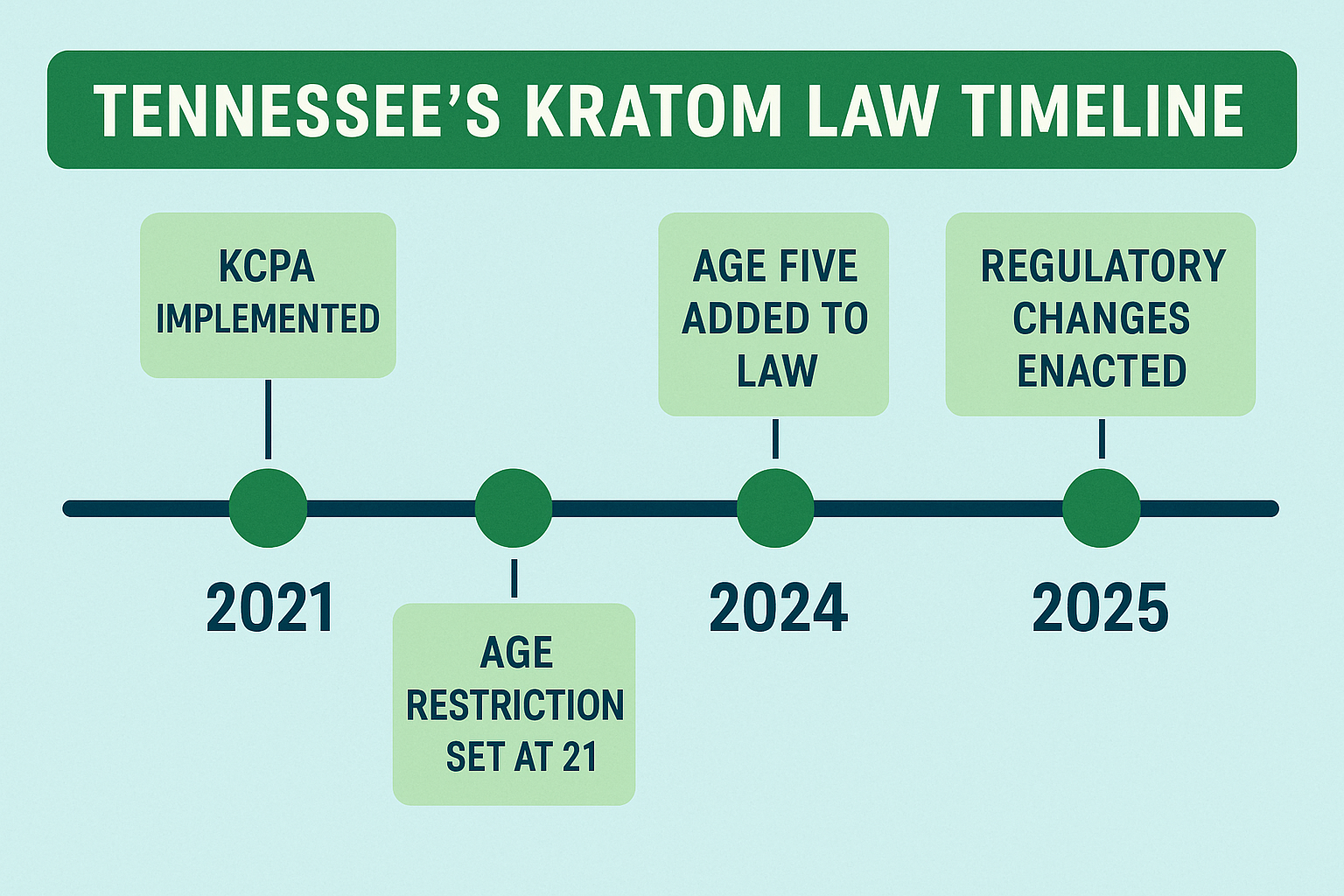
Key Provisions
The Tennessee Kratom Consumer Protection Act (KCPA) establishes comprehensive regulations for kratom products sold within the state. These provisions include:
Product Standards:
- Prohibition of adulterated kratom products
- Mandatory lab testing for contaminants
- Proper labeling requirements
- Restrictions on synthetic additives
Vendor Requirements:
- Business licensing and registration
- Compliance with testing protocols
- Accurate product labeling
- Age verification procedures
Consumer Protections:
- Clear ingredient disclosure
- Contamination prevention measures
- Quality assurance standards
- Recall procedures for unsafe products
Prohibited Substances
The KCPA specifically bans kratom products that contain:
- 7-hydroxymitragynine in concentrations exceeding 2% of total alkaloid content
- Synthetic compounds or research chemicals
- Dangerous adulterants or contaminants
- Undisclosed ingredients or fillers
These restrictions ensure that only natural, properly processed kratom reaches consumers while preventing potentially dangerous synthetic alternatives from entering the market.
Local Municipality Considerations
City and County Variations
While kratom is legal at the state level, Tennessee’s local governments retain the authority to implement additional restrictions. Some municipalities have chosen to:
- Impose stricter age requirements
- Limit where kratom can be sold
- Require additional business permits
- Implement zoning restrictions for kratom retailers
Important Note: Always check local ordinances in your specific city or county, as these can be more restrictive than state law.
Major Cities and Their Policies
Nashville: Follows state law with no additional restrictions
Memphis: Complies with Tennessee KCPA requirements
Knoxville: No additional local restrictions beyond state law
Chattanooga: Adheres to state regulations
However, these policies can change, so it’s essential to verify current local laws before purchasing or possessing kratom in any Tennessee municipality.
🏛️ Tennessee Kratom Legal Status Checker
Check if kratom is legal for you in Tennessee based on your situation
Purchasing Kratom Legally in Tennessee
Licensed Vendors and Retailers
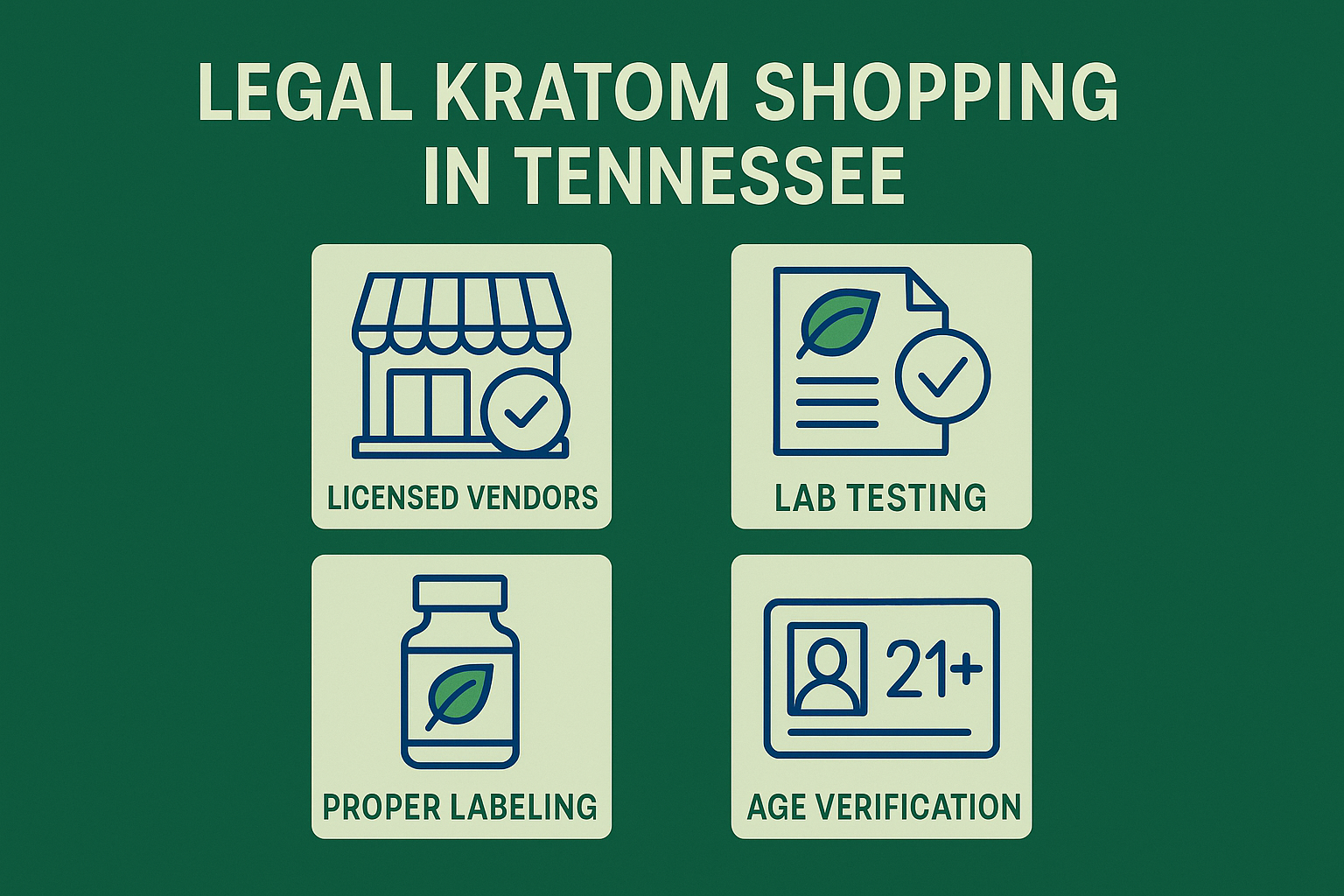
When looking for where to buy kratom in Tennessee, consumers should prioritize licensed retailers who comply with state regulations. Legal vendors must:
- Maintain proper business licenses
- Conduct regular product testing
- Provide accurate labeling
- Verify customer age
- Follow KCPA guidelines
What to Look for in Products
Quality Indicators:
- Third-party lab testing certificates
- Clear ingredient lists
- Proper packaging and labeling
- Batch tracking information
- Vendor transparency about sourcing
Red Flags to Avoid:
- Products without lab testing
- Unclear or missing labels
- Vendors who don’t verify age
- Products making medical claims
- Suspiciously low prices
When considering how to buy kratom safely, Tennessee residents should research vendors thoroughly and ensure they’re purchasing from authentic kratom vendors who follow state regulations.
Popular Kratom Strains Available in Tennessee
Legal Strain Options
Tennessee’s legal kratom market offers various strains that comply with state regulations. Popular options include:
White Strains:
- White Bali kratom – Known for energizing effects
- White Maeng Da – Popular for focus and alertness
- White Thai – Traditional energizing variety
Green Strains:
- Green Malay – Balanced effects
- Green Maeng Da – Moderate potency
- Green Borneo – Smooth, long-lasting
Red Strains:
- Red Bali – Popular for relaxation
- Red Maeng Da – Potent variety
- Gold Bali kratom – Unique fermented variety
Dosage Considerations
Understanding how much kratom to take is crucial for Tennessee residents new to kratom. Factors affecting dosage include:
- Individual body weight and metabolism
- Tolerance levels
- Desired effects
- Strain potency
- Time of consumption
Most users start with small amounts and gradually adjust based on their response. It’s also important to understand how long kratom takes to kick in to avoid taking too much too quickly.
Comparison with Other States
How Tennessee Compares
Tennessee’s approach to kratom regulation falls somewhere in the middle of the national spectrum:
More Restrictive Than:
- States with no age restrictions
- States without KCPA implementation
- States with minimal regulation
Less Restrictive Than:
- States with complete kratom bans
- States with stricter testing requirements
- States with limited strain availability
For comparison, kratom laws in Ohio follow a similar KCPA framework, while some states maintain complete prohibition.
Regional Trends
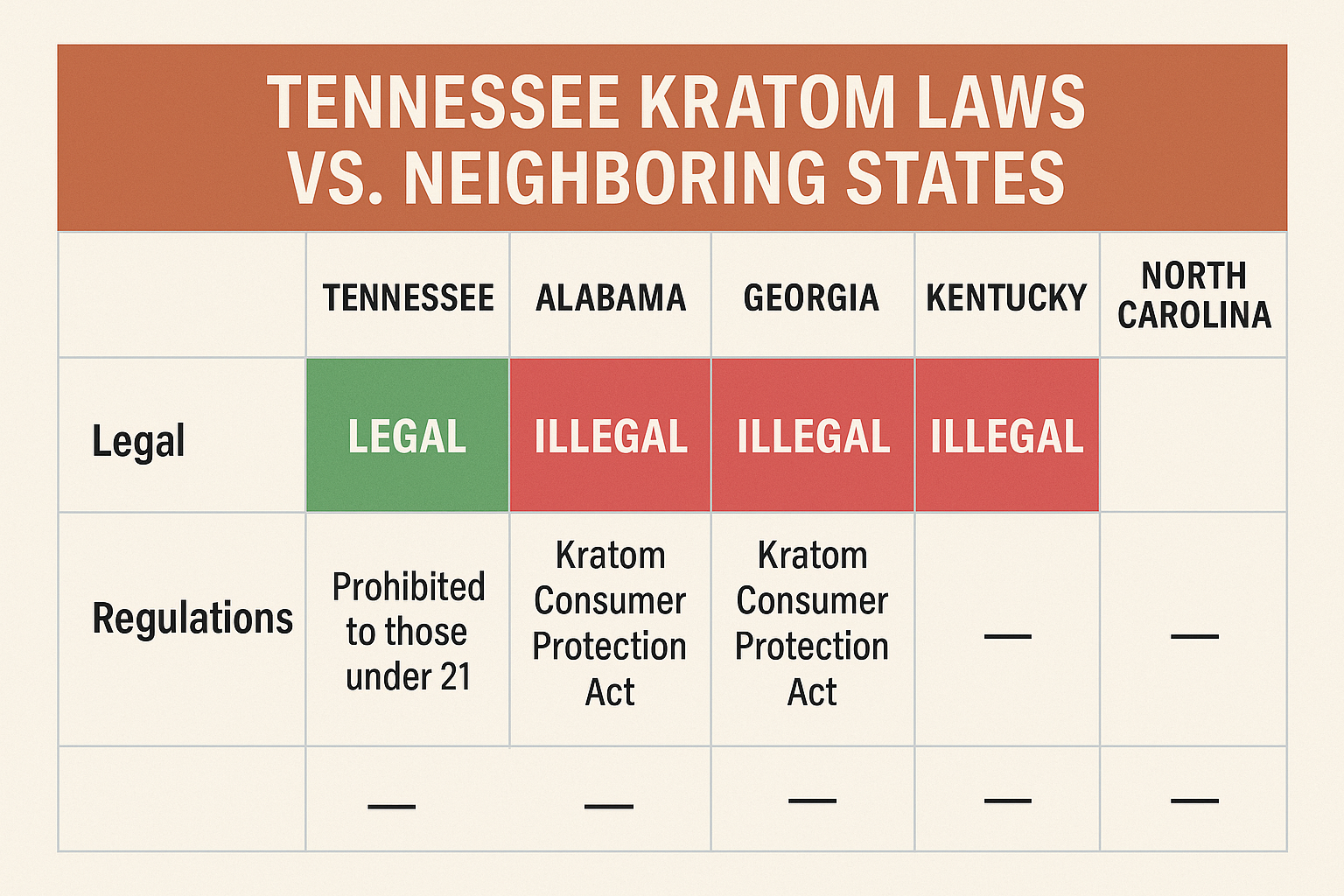
The Southeast has shown varied approaches to kratom regulation:
- Alabama: Complete ban
- Georgia: Legal with KCPA
- Kentucky: Legal with restrictions
- North Carolina: Legal with age limits
- Tennessee: Legal with KCPA and age restrictions
This patchwork of laws makes it essential for travelers and residents to understand their specific state’s regulations.
Enforcement and Penalties
Violation Consequences
Tennessee takes kratom law violations seriously, with penalties including:
For Minors:
- Confiscation of kratom products
- Potential fines
- Possible court appearances
- Educational requirements
For Vendors:
- Business license suspension or revocation
- Significant monetary fines
- Criminal charges for repeat offenses
- Product seizure and destruction
For Adults:
- Fines for possession of non-compliant products
- Legal liability for distribution to minors
- Potential criminal charges for large-scale violations
Law Enforcement Approach
Tennessee law enforcement generally focuses on:
- Vendor compliance rather than individual users
- Age verification enforcement
- Product safety violations
- Unlicensed sales operations
Most enforcement actions target businesses rather than individual consumers, provided adults are using compliant products.
Future of Kratom Laws in Tennessee
Potential Changes
Several factors could influence future kratom legislation in Tennessee:
Federal Developments:
- FDA regulatory decisions
- DEA scheduling considerations
- Congressional legislation
- Research findings
State-Level Factors:
- Public health data
- Enforcement experiences
- Industry compliance rates
- Constituent feedback
Staying Informed
Tennessee residents should monitor:
- State legislature sessions
- Regulatory agency announcements
- Industry association updates
- Local government meetings
Staying informed helps ensure continued compliance with evolving regulations.
🤔 Frequently Asked Questions About Kratom in Tennessee
Find quick answers to common questions about Tennessee kratom laws
Yes, kratom is legal for adults 21 and older in Tennessee. The state has implemented the Kratom Consumer Protection Act, which regulates the sale and distribution of kratom products while ensuring consumer safety.
You must be 21 years old or older to legally purchase, possess, or consume kratom in Tennessee. This age restriction is strictly enforced, and vendors are required to verify age through valid identification.
Yes, you can purchase kratom online and have it shipped to Tennessee, provided:
- You are 21 or older
- The vendor complies with Tennessee’s KCPA requirements
- The products meet state testing and labeling standards
- The vendor verifies your age before shipping
Tennessee bans kratom products that contain:
- 7-hydroxymitragynine exceeding 2% of total alkaloid content
- Synthetic compounds or research chemicals
- Dangerous adulterants or contaminants
- Undisclosed ingredients or fillers
Local municipalities in Tennessee can implement additional restrictions beyond state law. While major cities like Nashville, Memphis, and Knoxville generally follow state regulations, some smaller cities or counties may have stricter rules. Always check local ordinances in your specific area.
Penalties vary depending on the violation:
- Minors: Product confiscation, fines, possible court appearances
- Vendors: License suspension/revocation, significant fines, criminal charges for repeat offenses
- Adults: Fines for non-compliant products, legal liability for distribution to minors
Look for vendors who:
- Have proper business licenses
- Provide third-party lab testing certificates
- Follow proper labeling requirements
- Verify customer age
- Comply with KCPA guidelines
- Are transparent about their sourcing and testing
This depends on the laws of your destination state. Some states have banned kratom entirely, while others have different regulations. Always research the kratom laws of any state you plan to visit before traveling with kratom products.
Medical and Safety Considerations
Healthcare Provider Consultation
While kratom is legal in Tennessee for adults over 21, healthcare considerations remain important. Individuals should:
- Consult healthcare providers before starting kratom
- Discuss potential interactions with medications
- Monitor for adverse effects
- Consider underlying health conditions
- Follow responsible usage guidelines
Quality and Safety Standards
Tennessee’s KCPA helps ensure product safety through:
Testing Requirements:
- Heavy metals screening
- Microbial contamination testing
- Pesticide residue analysis
- Alkaloid content verification
- Adulterant detection
Safety Protocols:
- Good manufacturing practices
- Proper storage and handling
- Contamination prevention
- Quality control measures
- Batch tracking systems
Industry Impact and Economic Considerations
Market Development
Tennessee’s regulated kratom market has fostered:
- Legitimate business growth
- Consumer protection improvements
- Tax revenue generation
- Employment opportunities
- Industry standardization
Consumer Benefits
The regulatory framework provides:
- Product quality assurance
- Safety guarantees
- Legal purchasing options
- Consumer rights protection
- Market transparency
Tennessee’s approach demonstrates how regulation can balance access with safety, creating a sustainable market for kratom products.
Resources and Support
Official Information Sources
State Resources:
- Tennessee Department of Health
- Tennessee Department of Agriculture
- State legislature websites
- Local government offices
Industry Resources:
- American Kratom Association
- Kratom trade associations
- Vendor compliance information
- Testing laboratory networks
Staying Compliant
Tennessee residents should:
- Regularly check for law updates
- Purchase from licensed vendors only
- Verify product compliance
- Understand local restrictions
- Maintain proper documentation
For those interested in exploring quality kratom options, The Bulk Kratom offers comprehensive information about various strains and vendors that comply with state regulations.
Conclusion
Is kratom legal in Tennessee? Yes, kratom remains legal for adults 21 and older under the state’s Kratom Consumer Protection Act. Tennessee has chosen a balanced approach that prioritizes consumer safety while maintaining access to quality kratom products. The state’s regulatory framework includes age restrictions, product testing requirements, vendor licensing, and quality standards that protect consumers while supporting a legitimate kratom industry.
Key points for Tennessee residents include understanding the 21-year age requirement, purchasing from compliant vendors, checking local ordinances, and staying informed about potential law changes. The state’s approach serves as a model for other jurisdictions considering kratom regulation, demonstrating how proper oversight can balance public safety with consumer access.
Whether you’re a long-time kratom user or considering trying it for the first time, understanding Tennessee’s laws ensures you can make informed decisions while staying compliant with state regulations. As the legal landscape continues to evolve, staying informed through official sources and reputable vendors remains essential for all Tennessee kratom consumers.
Logan Pierce
Logan Pierce is an environmental thinker and advocate for traditional ecological knowledge. His journey began in the foothills of Colorado where he first studied native flora and their roles in community life. With an academic background in cultural geography, Logan has pursued fieldwork across North and Central America to understand the living relationships between people and plants. His work is deeply rooted in observation and documentation, not interpretation. Logan sees each plant not just as a species, but as a part of a story—a living archive of cultural interaction. He enjoys sharing insights that spark appreciation for age-old knowledge systems.
