

🌿 Experience Premium Kratom Excellence
Jack Botanicals - AKA Certified | Superior Quality & Unbeatable Value
✨ EXCLUSIVE DEAL: JACK30 = 30% OFF Today!
Get Your Discount Now →Chronic pain affects millions of people worldwide, driving many to seek natural alternatives to traditional pharmaceutical options. Among these alternatives, kratom has emerged as a popular botanical supplement, but understanding what kratom is best for pain can be overwhelming given the variety of strains and vein colors available. This comprehensive analysis explores the most effective kratom strains for pain relief, their mechanisms of action, proper dosing strategies, and essential safety considerations to help you make an informed decision.
Understanding Kratom and Its Pain-Relieving Properties
Kratom (Mitragyna speciosa) is a tropical tree native to Southeast Asia, where its leaves have been used for centuries in traditional medicine. The plant contains over 40 alkaloids, with mitragynine and 7-hydroxymitragynine being the primary compounds responsible for pain relief.
How Kratom Works for Pain Management
These alkaloids interact with opioid receptors in the brain, similar to conventional pain medications but through a different mechanism. This interaction produces:
✅ Analgesic effects – Direct pain signal suppression
✅ Anti-inflammatory properties – Reduction of inflammation-related discomfort
✅ Mood enhancement – Improved pain tolerance through elevated mood
✅ Muscle relaxation – Relief from tension-related pain
Unlike traditional opioids, kratom’s alkaloids are partial agonists, which may contribute to a different safety profile, though research is still ongoing.
The Vein Color Classification System
Kratom strains are categorized by vein color, which indicates the maturity of the leaves at harvest and significantly affects their alkaloid profile:
🏆 America's Most Trusted Kratom Source
Jack Botanicals - AKA Approved | Premium Quality at Best Prices
💚 INSTANT SAVINGS: JACK30 for 30% OFF!
Shop Now & Save →| Vein Color | Primary Effects | Best For |
|---|---|---|
| Red 🔴 | Sedating, pain-relieving, relaxing | Chronic pain, severe discomfort, nighttime use |
| Green 🟢 | Balanced energy and pain relief | Moderate pain with need for functionality |
| White ⚪ | Energizing, stimulating, mild pain relief | Mild pain with fatigue, daytime use |
| Yellow/Gold 🟡 | Moderate effects between red and green | Mild to moderate pain, balanced relief |
For pain management specifically, red vein strains are overwhelmingly preferred by users and recommended by kratom specialists.
Top Kratom Strains for Pain Relief
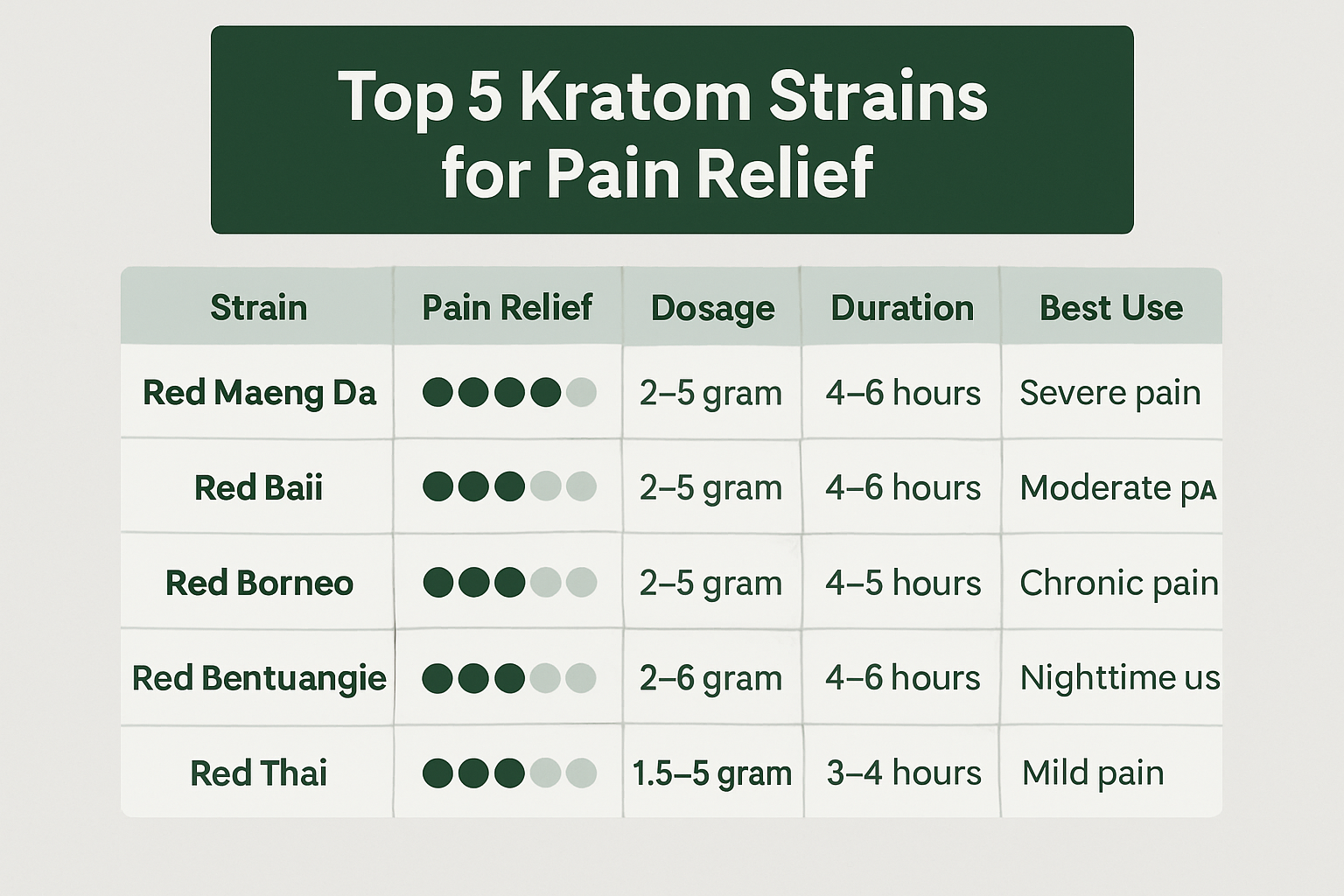
1. Red Maeng Da Kratom 🏆
Red Maeng Da consistently ranks as the most potent option when considering what kratom is best for pain. This strain originated in Thailand and is known for its:
- High alkaloid concentration – Superior pain-blocking capabilities
- Long-lasting effects – Relief typically extends 5-7 hours
- Balanced profile – Pain relief without excessive sedation
- Mood enhancement – Helps combat pain-related depression
Ideal for: Severe chronic pain, arthritis, fibromyalgia, back pain
Typical dosage: 3-6 grams for most users
You can find quality Maeng Da kratom capsules from verified vendors who test their products for purity.
2. Red Bali Kratom
Red Bali is perhaps the most popular strain for pain relief due to its accessibility and effectiveness. Characteristics include:
- Strong analgesic properties – Excellent for moderate to severe pain
- Relaxation and sedation – Ideal for evening use or sleep difficulties
- Cost-effective – Generally more affordable than other strains
- Gentle onset – Smooth experience without overwhelming effects
Ideal for: General pain management, muscle pain, tension headaches, insomnia related to pain
Typical dosage: 4-7 grams
3. Red Borneo Kratom
Native to the island of Borneo, this strain offers a unique alkaloid profile that makes it exceptional for pain:
- Potent pain relief – Particularly effective for nerve pain
- Calming effects – Reduces anxiety that often accompanies chronic pain
- Moderate sedation – Less drowsiness than Red Bali
- Mood stabilization – Helps maintain emotional balance
Ideal for: Neuropathic pain, migraines, anxiety-related pain conditions
Typical dosage: 3-6 grams
4. Red Bentuangie Kratom
Red Bentuangie undergoes a unique fermentation process that alters its alkaloid composition, creating distinct benefits:
- Deep relaxation – Profound muscle tension relief
- Enhanced pain blocking – Fermentation may increase 7-hydroxymitragynine
- Stress reduction – Significant anxiolytic properties
- Sleep promotion – Excellent for pain that interferes with rest
Ideal for: Severe pain, post-surgical recovery, pain-related insomnia
Typical dosage: 4-6 grams
5. Red Thai Kratom
Red Thai provides a gentler approach to pain management with notable characteristics:
- Moderate pain relief – Effective without heavy sedation
- Energy preservation – Less likely to cause drowsiness
- Mood elevation – Notable euphoric qualities
- Versatility – Suitable for daytime or evening use
Ideal for: Moderate pain requiring maintained productivity, daytime pain management
Typical dosage: 3-5 grams
Green and White Strains for Pain: When They Make Sense
While red strains dominate pain management discussions, certain situations call for green or white varieties:
Green Malay Kratom
When you need pain relief plus energy, Green Malay offers:
- Moderate analgesic effects
- Sustained energy and focus
- Long duration (6-8 hours)
- Mood enhancement
Best for: Mild to moderate pain during work hours, pain with fatigue
White Bentuangie Kratom
White Bentuangie provides a unique combination:
- Mild pain relief
- Significant energy boost
- Mental clarity
- Motivation enhancement
Best for: Minor pain with depression or fatigue, morning pain management
Dosage Guidelines for Pain Management
Determining the right dosage is crucial when exploring what kratom is best for pain. Individual factors like body weight, metabolism, tolerance, and pain severity all influence optimal dosing.
General Dosage Framework
Low Dose (1-3 grams):
- Mild pain relief
- Increased energy
- Enhanced focus
- Minimal sedation
Moderate Dose (3-5 grams):
- Moderate pain relief
- Balanced effects
- Suitable for most pain conditions
- Recommended starting point
High Dose (5-8 grams):
- Strong pain relief
- Significant sedation
- Maximum analgesic effects
- Reserved for severe pain
Very High Dose (8+ grams):
- ⚠️ Not recommended
- Increased side effect risk
- Tolerance development
- Diminishing returns
Dosage Tips for Optimal Results
💡 Start low and go slow – Begin with 2-3 grams and increase gradually
💡 Take on an empty stomach – Enhances absorption and effectiveness
💡 Wait 30-45 minutes – Allow time for effects before redosing
💡 Rotate strains – Prevents tolerance buildup
💡 Stay hydrated – Kratom can be dehydrating
Quality and Sourcing Considerations
The effectiveness of kratom for pain depends heavily on product quality. When researching what is the best kratom for your needs, consider these factors:
What to Look For in Quality Kratom
✔️ Third-party lab testing – Verifies alkaloid content and purity
✔️ Transparent sourcing – Clear origin information
✔️ Fresh product – Recent harvest dates
✔️ Proper storage – Sealed, moisture-free packaging
✔️ Customer reviews – Verified user experiences
✔️ AKA certification – American Kratom Association GMP compliance
Reputable Vendor Characteristics
When selecting where to purchase, look for vendors like those reviewed on The Bulk Kratom who demonstrate:
- Consistent product quality
- Detailed strain information
- Responsive customer service
- Money-back guarantees
- Educational resources
Vendors such as those featured in Fish Tea Kratom reviews and EZ Kratom reviews often meet these high standards.
🌿 Find Your Ideal Kratom Strain for Pain
Answer a few questions to get personalized strain recommendations
Your Personalized Recommendation
Alternative Options to Consider:
Forms of Kratom for Pain Management
Kratom is available in several forms, each with advantages:
Powder
- Pros: Most affordable, versatile, fast-acting
- Cons: Bitter taste, measuring required
- Best for: Experienced users, budget-conscious buyers
Capsules
- Pros: Convenient, pre-measured, tasteless
- Cons: More expensive, slower onset
- Best for: Beginners, on-the-go use
Extracts
- Pros: Highly potent, small doses needed
- Cons: Expensive, higher tolerance risk
- Best for: Severe pain, experienced users
Tea
- Pros: Traditional method, gentle on stomach
- Cons: Time-consuming, less potent
- Best for: Those with digestive sensitivity
Potential Side Effects and Safety Considerations
While kratom offers significant pain relief benefits, responsible use requires awareness of potential side effects:
Common Side Effects
- Nausea (especially at higher doses)
- Constipation
- Dizziness
- Drowsiness
- Dry mouth
- Loss of appetite
Serious Concerns
⚠️ Dependency potential – Regular use can lead to physical dependence
⚠️ Tolerance development – Effectiveness may decrease over time
⚠️ Drug interactions – May interact with medications
⚠️ Contamination risk – Poor quality products may contain adulterants
Safe Use Practices
- Avoid daily use – Take regular breaks to prevent tolerance
- Don’t mix with other substances – Especially alcohol or medications
- Monitor your response – Keep a journal of effects and dosages
- Consult healthcare providers – Especially if you have medical conditions
- Know the legal status – Kratom legality varies by location
Comparing Kratom to Other Pain Management Options
Understanding how kratom compares to alternatives helps contextualize its role in pain management:
| Option | Pain Relief | Side Effects | Dependency Risk | Accessibility |
|---|---|---|---|---|
| Kratom | Moderate-High | Moderate | Moderate | Variable by location |
| Prescription Opioids | High | High | High | Prescription required |
| NSAIDs | Low-Moderate | Moderate | Low | Over-the-counter |
| CBD | Low-Moderate | Low | Very Low | Widely available |
| Physical Therapy | Moderate | Low | None | Requires professional |
Kratom occupies a middle ground, offering substantial pain relief with moderate risks when used responsibly.
Creating an Effective Kratom Pain Management Protocol
To maximize benefits and minimize risks, develop a structured approach:
Step 1: Identify Your Pain Profile
- Type of pain (acute vs. chronic, neuropathic vs. inflammatory)
- Severity level (mild, moderate, severe)
- Time patterns (constant, intermittent, activity-related)
- Impact on daily function
Step 2: Select Appropriate Strains
- Severe constant pain: Red Maeng Da or Red Bentuangie
- Moderate daily pain: Red Bali or Red Borneo
- Pain with fatigue: Green Malay or blend with red strains
- Nighttime pain: Red Bali or Red Bentuangie
Step 3: Establish Dosing Schedule
- Start with moderate dose (3-4 grams)
- Take 1-2 times daily maximum
- Schedule breaks (2 days off per week minimum)
- Rotate between 2-3 strains
Step 4: Monitor and Adjust
- Track effectiveness in pain journal
- Note any side effects
- Adjust dosage in 0.5-gram increments
- Reassess strain selection monthly
Step 5: Implement Safety Measures
- Source from verified vendors only
- Store properly in cool, dark place
- Stay hydrated (8+ glasses water daily)
- Maintain healthy lifestyle habits
User Experiences and Testimonials
While individual experiences vary, common themes emerge from the kratom community regarding pain management:
“After years of prescription pain medications for my fibromyalgia, Red Maeng Da has given me my life back. I can function during the day without the fog of traditional painkillers.”
“I was skeptical, but Red Bali has been a game-changer for my chronic back pain. I use 4 grams in the evening and finally sleep through the night.”
“For my arthritis, I rotate between Red Borneo and Green Malay depending on whether I need more pain relief or more energy. It’s been the perfect solution.”
These experiences highlight the importance of finding the right strain and dosage for individual needs.
Frequently Asked Questions
Understanding what kratom is best for pain requires addressing common questions and concerns that arise when exploring this botanical option.
❓ Frequently Asked Questions
Common questions about kratom for pain relief
Interactive Strain Selector Tool
To help you determine what kratom is best for pain based on your specific needs, use this interactive tool:
Conclusion
Determining what kratom is best for pain requires understanding that no single answer fits everyone.
Rachel Donovan
Rachel Donovan has always been fascinated by the healing philosophies found across different cultures. Her work centers on the human-nature connection, with a focus on traditional practices and how they’ve evolved through time. Growing up in a family that appreciated gardening and plant rituals, she developed a unique appreciation for nature's role in spiritual and physical balance. Rachel is a dedicated advocate for mindful living, seasonal harmony, and intentional exploration of plant-based customs. Her contributions aim to preserve the wisdom passed down through generations, while offering modern insights for people seeking nature-centered perspectives on well-being and tradition.
